HECO Rule 14H Explained: Grid Compliance for Maui Solar Systems
2026 update on HECO Rule 14H requirements for Maui solar + storage interconnections, including inverter standards, Quick Connect, and inspection timelines.
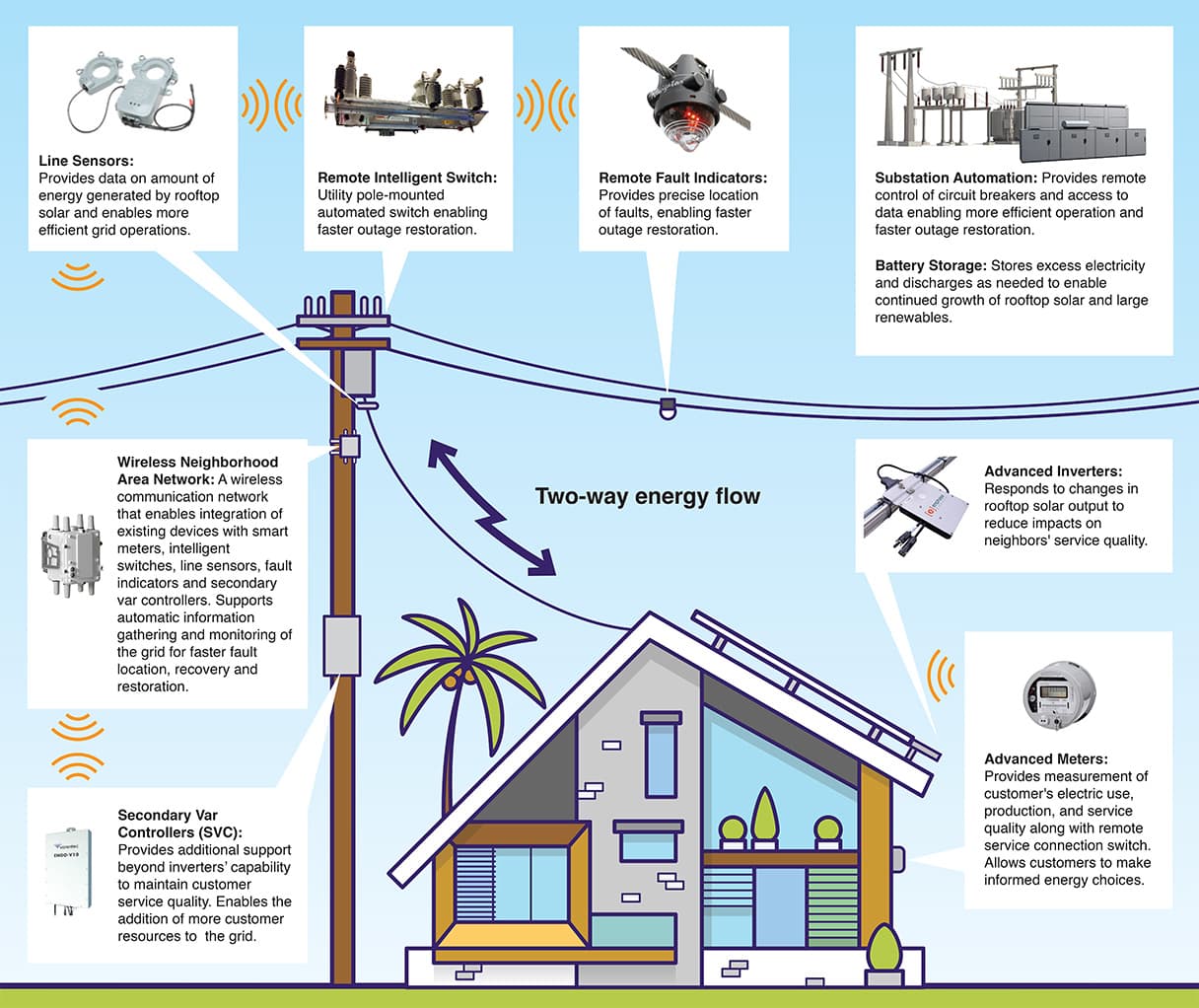
Rule 14H is Hawaiian Electric's governing document for distributed energy resources (DER) interconnecting to the Maui grid. It defines the technical, safety, and procedural requirements your solar + storage system must meet before operating in parallel with the utility.
**Advanced inverter functions:** All new DERs must use smart inverters certified to Hawaiian Electric's Source Requirement Document (SRD) V2.0 and UL 1741 SB (3rd edition). These devices handle voltage ride-through, frequency response, Volt/VAR, and power curtailment to stabilize feeders.
**Safety standards:** Installations must comply with NEC 2020, IEEE 1547, and UL safety listings. Equipment must appear on Hawaiian Electric's Qualified Equipment List (QEL).
**Manual disconnect + no backfeed:** Systems need a plainly labeled AC disconnect and anti-islanding controls to ensure zero backfeed when utility power is down, protecting line crews.
Compliance & Inspection Process
**Application review:** Hawaiian Electric typically takes ~15 business days to confirm an application is complete and another ~15 business days for the initial technical review.
**Equipment validation:** Submitted one-line diagrams and equipment schedules are checked against the QEL and SRD requirements.
**Final inspection:** Before continuous operation, the utility verifies that installed hardware matches the approved design and performs as modeled.
Quick Connect and Expedited Paths
The Quick Connect pathway lets residential systems up to 25 kW be built and energized prior to the utility's final review, provided they still satisfy Rule 14H design rules. Applicants must submit the full interconnection package afterward for record-keeping and possible upgrades.
Impact on System Size
System capacity limits depend on each circuit's hosting capacity analysis. Programs like Smart Renewable Energy Non-Export have no overall program cap, but individual systems are still limited by Rule 14H voltage flicker, short-circuit, and transformer loading constraints. Hawaiian Electric may require upgrades or size reductions if limits are exceeded.
Ownership Transfers & Automatic Agreements
Interconnection agreements now transfer automatically with the property, so new owners inherit both the benefits and responsibilities without filing new paperwork—though they must keep the system configured per Rule 14H.
Key Takeaways
Work with installers who regularly navigate Rule 14H paperwork, use SRD V2.0-certified inverters, and understand Quick Connect eligibility. Submitting accurate drawings, labeling the manual disconnect, and planning for inspection timelines keeps your project on track in 2026.
Related Posts
Ready to Go Solar?
Get free quotes from top-rated Maui solar installers and start saving today.